
August 13, 2026 · 8 min read
Ad intelligence MCP server: how to pick one for your team in 2026
Learn what an ad intelligence MCP server is, compare the top options in 2026, and see how AI agents use them for competitive ad research and reporting.
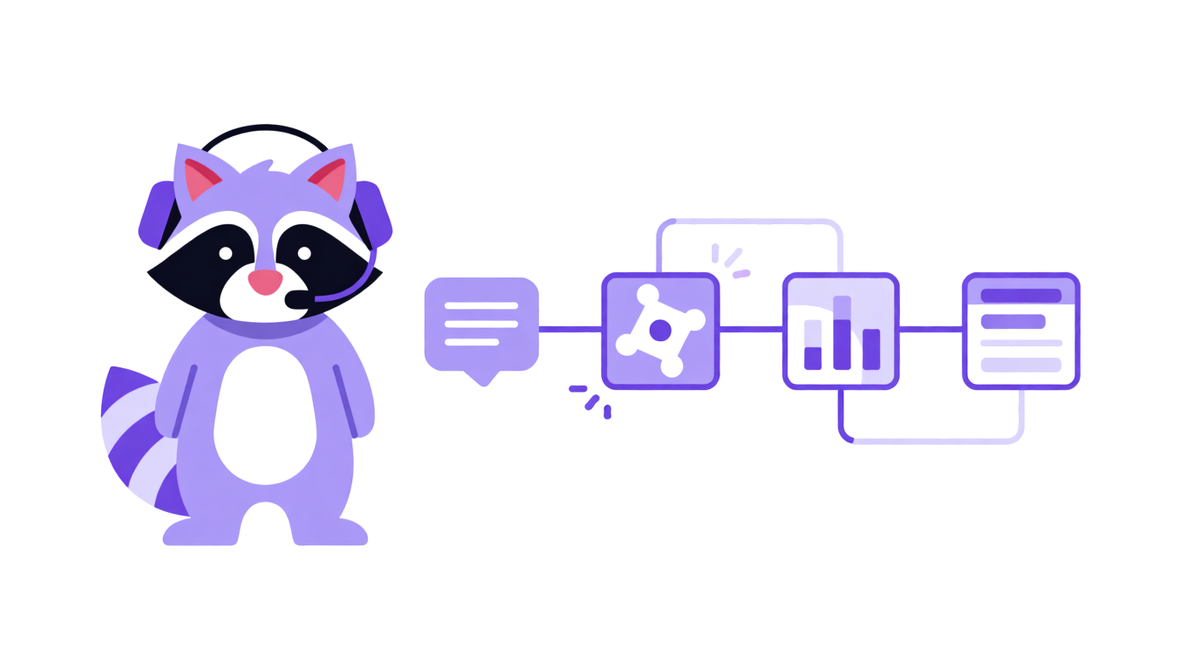
Ad intelligence MCP servers are one of the fastest-growing tool categories in performance marketing. In the last twelve months, Google, Amazon, AdRoll, and Guideline have all shipped MCP servers that give AI agents direct access to advertising data. If your team works in ChatGPT or Claude, an ad intelligence MCP server can pull competitor spend, creative analysis, and campaign reporting into that same chat window.
This guide explains what an ad intelligence MCP server is, what changed in 2026, how to evaluate the options, and how to set one up. The goal is practical: you should finish with a clear shortlist and a working setup, not a pile of jargon.
What is an ad intelligence MCP server?
An ad intelligence MCP server is a small service that follows the Model Context Protocol (MCP). It sits between an AI assistant and an advertising data source, and it exposes that data as tools the assistant can call. Instead of exporting a CSV from the Meta Ads Library and pasting it into a prompt, you ask the assistant to query the server directly.
MCP is an open standard that Anthropic introduced and donated to the Agentic AI Foundation under the Linux Foundation in December 2025 Guideline's launch announcement. That means the same server works with ChatGPT, Claude, Gemini, and other MCP-compatible clients. The data provider builds the server once, and every assistant can use it.
There are two broad flavors. The first gives an agent read access to ad performance and market data: spend, impressions, creatives, and competitor benchmarks. The second adds write access, so the agent can create campaign drafts, update budgets, or launch ads. Most teams should start read-only and add write tools only after the workflow is proven.
Why ad intelligence is moving into AI agents
Advertisers already work in AI chat windows for briefs, analysis, and reporting. The friction is that the data lives in dashboards and APIs. MCP removes that friction by making the data callable from the same place the work happens. Guideline describes the shift as moving from dashboard access to decision-ready intelligence source.
The market is signaling that this is not an experiment. Guideline's Ad Intelligence MCP Server launched in July 2026 and exposes roughly $200 billion in annual media investment across 65 countries to supported AI tools. Amazon opened its Ads MCP Server to beta in early 2026 with tools that turn a natural language prompt into a full campaign launch Amazon Ads announcement. When the largest ad platforms ship MCP servers, the category is past the early-adopter stage.
For agencies and in-house teams, the practical effect is fewer manual exports and faster answers. A report that took an analyst an hour to assemble can be pulled by an agent in seconds, then checked by the analyst before any decision. The agent does not replace the analyst. It removes the data-gathering work.
The ad intelligence MCP server landscape in 2026
Guideline. The first product to use the exact name ad intelligence MCP server. It exposes proprietary ad spend, pricing, and market intelligence to ChatGPT, Claude, Gemini, and Copilot, and it is built for agencies, brands, and media owners that want benchmark data inside their AI workflows.
Amazon Ads. In open beta since early 2026, it connects agents to the Amazon Ads API and acts as a translation layer between natural language and structured API calls. Its orchestration tools combine multiple steps, such as creating a campaign, an ad group, and an ad from a single prompt Amazon Ads announcement.
Google Ads. Google's official MCP server is read-only and exposes account discovery plus GAQL search. It is a developer tool first, aimed at teams that already work with the Google Ads API Google Ads MCP docs. We covered the setup in depth in our guide to the Google Ads API MCP server.
AdRoll and community servers. AdRoll ships an MCP server for campaign reporting and ABM account intelligence. The open-source community has built servers for Meta, TikTok, LinkedIn, Reddit Ads, and OpenAI's ChatGPT Ads API. Quality varies widely, which is why the evaluation section matters.
How to evaluate an ad intelligence MCP server
Start with the data, not the demo. Ask what datasets the server exposes, how fresh the data is, and whether it covers the platforms and markets you care about. A server that reads your own campaign history is different from one that provides competitive intelligence across brands.
Read-only versus write access. For a first rollout, prefer read-only. Google's MCP server is read-only by design Google Ads MCP docs. Amazon's includes write tools but stages work for review. Write access to campaign budgets is powerful and risky, so you want approval flows in place.
Authentication and permissions. The server should authenticate with OAuth or a service account and respect the same permissions as the underlying platform. Ask whether a connected agent can act on behalf of any user in the account, or only the account owner.
Operational fit. Check the transport (stdio versus HTTP), whether the server is hosted or self-hosted, and how updates are handled. A self-hosted server you maintain is a real cost. A hosted one may add a subscription.
How to set up an ad intelligence MCP server
Setup is a configuration file in most assistants. In Claude Desktop or a similar MCP-compatible client, you add a block to the client config that points at the server. For a local server, that means a command and environment variables. For a hosted server, it means a URL.
A Google Ads MCP setup, as documented by Google, adds a server entry named google-ads-mcp that runs via pipx with environment variables for the project ID and developer token Google Ads MCP docs. After restarting the client, the assistant can discover the server's tools.
Then test with a simple prompt. Ask what customers the account has access to, then ask for a seven-day performance summary. If the response uses live data, the server is working. If it returns static text or an error, check the environment variables and permissions before going further.
For ad intelligence that spans multiple platforms, consider a server that aggregates sources. The adextract MCP server exposes competitive ad intelligence across ad libraries, so an agent can compare creative strategy across Meta, TikTok, and Google from one connection.
Ad intelligence MCP use cases for performance teams
Competitive research briefs. Ask the agent to recap a competitor's recent creatives, messaging angles, and estimated spend before a pitch or a planning session. The agent pulls from the ad intelligence server and drafts the brief in the same conversation.
Reporting and anomaly detection. Connect campaign reporting to the agent and ask it to flag budget pacing issues or week-over-week changes. AdRoll describes exactly this pattern for campaign performance questions AdRoll MCP server.
Creative analysis at scale. With a server that indexes ad libraries, the agent can group hundreds of creatives by theme, hook, and format, then rank them by engagement signals. That turns a two-day audit into an afternoon.
Drafting campaign updates. Once read-only workflows are stable, some teams add write tools to create campaign drafts that a human reviews before launch. Amazon's MCP tools follow this review-first pattern Amazon Ads announcement.
Security and permissions to check before you connect
The biggest risk is an over-permissioned agent. An agent connected to a write-capable server can change budgets or pause campaigns. Keep write tools disabled until you have tested the read path and defined an approval process.
Check what the agent can see. MCP servers can expose account lists, billing data, and audience lists. Scope the server to the minimum datasets your team needs, and use separate credentials for read-only and write use cases.
Audit the server itself. Community MCP servers vary in quality. Read the source, check how tokens are stored, and avoid servers that send credentials to third-party endpoints. The open protocol does not guarantee open trust.
Common mistakes to avoid
Treating every MCP server as equally trustworthy. The protocol is a standard, but the servers are not. A well-known platform server is different from a weekend side project.
Skipping the read-only phase. Jumping straight to write access without validating data quality leads to bad budget decisions and erodes trust in the agent.
Expecting an MCP server to replace your analytics stack. The server is a connection layer. You still need the underlying ad intelligence and the analyst to interpret it.
Forgetting to update the server. Self-hosted servers need maintenance. A stale server can silently break when the platform API changes.
Next steps
The ad intelligence MCP server category is young but moving fast. The safest entry point is a read-only connection to one platform, a clear question you want answered, and a human who verifies the output before it influences spend.
To understand how AI agents use MCP for ad intelligence, read our guide to MCP servers for ad platforms. To build your own setup, see our walkthrough of an MCP-powered competitive ad intelligence stack.
August 2026 update: the MCP landscape keeps consolidating
The category moved fast since this guide was written. MCP was donated to the Agentic AI Foundation under the Linux Foundation in December 2025, which means the protocol now has the backing of the biggest AI vendors rather than a single company. For buyers, that is a durability signal: a server built on MCP today will not be orphaned by a proprietary protocol change.
The second change is platform coverage. Google, Amazon, Guideline, and AdRoll all ship servers now, and the platform-specific options keep getting better. If you run LinkedIn ads, the LinkedIn Ads API MCP server shows how agents pull campaign data and segment CPL by audience. If TikTok is your primary channel, the TikTok Ads API for AI agents covers campaign creation and creative management through the same protocol.
The practical shortlist is the same as it was: start read-only, verify the data, then add write tools only with an approval flow. What changed is that the read-only tier is now genuinely competitive, so teams can run a full agent workflow against live ad data without touching budgets.
One more thing worth watching: the servers are getting more opinionated about what an agent should be able to do. Read-only servers document their limits clearly, which is exactly what you want for compliance and audit trails. Expect the hosted options to add governance features as the category matures.
Frequently asked questions
What is an ad intelligence MCP server?
It is a service that uses the Model Context Protocol to give AI assistants access to advertising data, such as competitor spend, creative libraries, and campaign reporting, through callable tools.
Is an ad intelligence MCP server safe to connect to my ad account?
It depends on permissions. Start with read-only servers, scope access to the minimum datasets, and keep write tools disabled until you have an approval process.
Do I need to know how to code to use one?
For hosted servers, no. You add the server to your assistant's MCP config and test with natural language. For self-hosted servers, you need basic command-line skills.
What is the difference between an ad intelligence MCP server and an API?
An API exposes raw endpoints that require code. An MCP server wraps those endpoints as tools an AI agent can discover and call, so the agent handles the integration for you.
Which MCP servers work with ChatGPT and Claude?
MCP is an open standard, so most servers work with both. Guideline, Amazon Ads, Google Ads, and AdRoll all support MCP-compatible clients.