
October 2, 2026 · 8 min read
ChatGPT ad analysis plugin: what to install and how to connect it
ChatGPT plugins returned in 2026 as apps and MCP connectors. Here is how to add an ad analysis connector, which ones exist, and what the ad data can and cannot tell you.
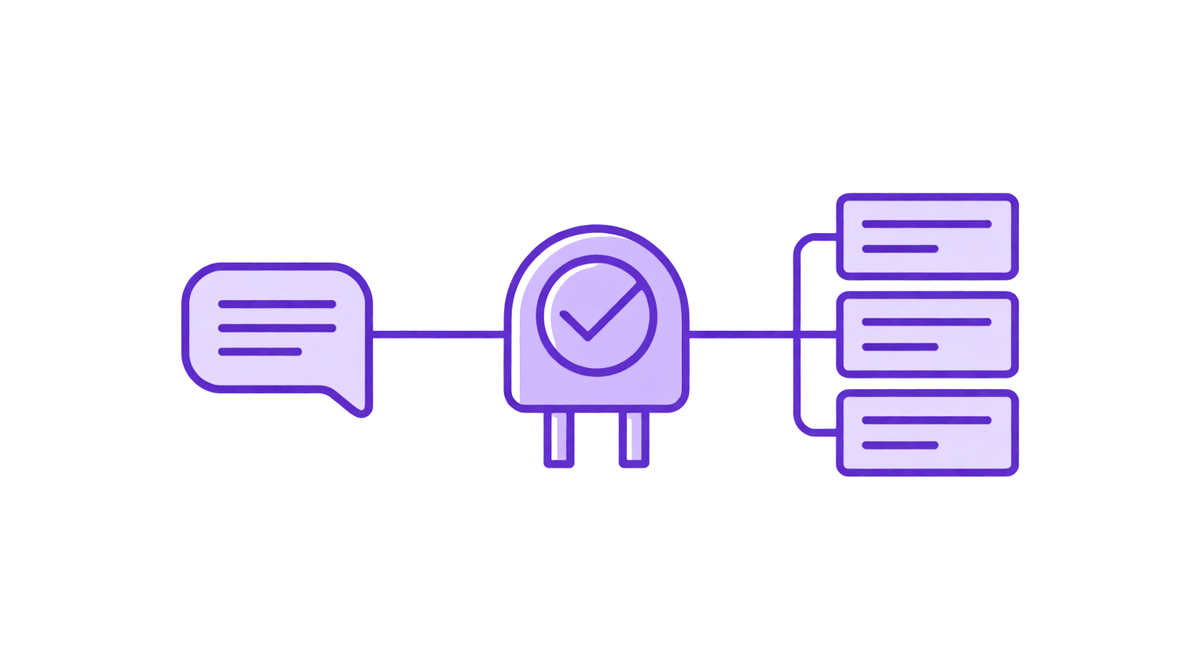
A ChatGPT ad analysis plugin in 2026 is either a first-party plugin such as Ads Manager or a custom MCP connector you paste in yourself. Install Ads Manager from Plugins to manage your own campaigns. To read competitor ads, add a read-only connector such as adextract, which needs Developer mode turned on first.
What a ChatGPT ad analysis plugin actually is now
The 2023 plugin store is gone. Plugins returned on July 9, 2026 as the directory layer for apps, skills and app templates across ChatGPT and Codex. Underneath, the plumbing is the Model Context Protocol, the open standard OpenAI built the Apps SDK around when apps arrived in ChatGPT on October 6, 2025.
So when someone asks for an ad analysis plugin, they usually mean one of three different things: a plugin OpenAI built itself, an app in the directory from a vendor, or a custom MCP connector pointed at an ad-data server. The first two install with a click. The third is the one that reaches ad sources OpenAI has not packaged.
That distinction decides everything downstream: which ad accounts you can reach, whether the assistant can write, and who holds the OAuth token.
The three ways to get ad data into ChatGPT
Built-in and directory apps. OpenAI packages the integration, you click connect and sign in. No URL, no Developer mode, no hosting.
Custom MCP connectors. You paste a remote server's HTTPS URL and authenticate. This is the only route to a data source OpenAI has not packaged, and it is how a public ad library gets into the chat.
Pipeline apps. Tools such as Windsor.ai, Supermetrics and Coupler.io connect ad platforms to ChatGPT through their own dataset layer rather than a purpose-built server. Helpful when you want many sources under one login, less helpful when you need one specific source done well.
The mechanics are the same protocol Claude, Cursor and Codex speak, and our explainer on how MCP servers connect AI agents to ad platforms goes deeper on the wiring.
How do you add a custom ad connector in ChatGPT?
Developer mode is the gate, and it sits behind a paid plan. ChatGPT's help documentation puts the toggle under Settings, then Security and login, though OpenAI has moved it more than once and older guides still point at Settings, then Connectors, then Advanced.
Plan limits in practice: Free gets built-in apps only and no custom connectors. Plus and Pro can turn Developer mode on. Business, Enterprise and Edu can as well, but a workspace admin can switch it off or allowlist specific connectors, and on Business plans only an owner or admin can enable it at all.
With Developer mode on, open Plugins, choose Add, then Create MCP App, paste the server's HTTPS URL, pick the authentication type and create it.
Two constraints catch people out. ChatGPT never launches a server itself, so a local npx or node server has to be hosted or reached through OpenAI's Secure MCP Tunnel. And tool calls consume messages, so an agentic loop that chains six calls burns far more allowance than a normal chat.
Verify before you brief anyone. Ask the assistant to list the tools the connector exposes. If the tool names you expected are missing, the connection succeeded but the scopes did not.
The ChatGPT Ads Manager plugin and the third-party options
OpenAI's own entry is the ChatGPT Ads Manager plugin, published in the Operations category and marked interactive, read and write. It discovers and manages ad accounts, campaigns, ad groups and ads, analyzes performance, conversions and change history, uploads creative images and, where available, completes self-serve account setup.
It exists because ChatGPT Ads became a real ad platform. OpenAI opened the self-serve Ads Manager to all US businesses on May 5, 2026 and introduced cost-per-click bidding in the same announcement, which Axios reported that day.
On September 16, 2026 OpenAI described advertisers creating, updating and analyzing campaigns from natural-language prompts directly in ChatGPT. On September 23, 2026 the network expanded into Southeast Asia and Taiwan, reaching more than 60 countries.
The third-party side splits by job. Adspirer and Porter Metrics connect account-level ad platforms. Windsor.ai and Coupler.io connect hundreds of sources. adextract connects the public ad libraries instead: Meta, Google, LinkedIn and TikTok, plus a tool that reads a creative image or video.
Our breakdown of campaign-management servers versus ad-intelligence servers explains why those two families fail in different ways.
Which ChatGPT ad app should you install first?
Answer the question of whose data you need. If you need your own spend, clicks and conversions, install the platform's own server. Ads Manager covers ChatGPT Ads. For Google Ads the official server is read-only and needs OAuth credentials plus a developer token, which our Google Ads API MCP server walkthrough covers step by step.
If you need competitor creative, no account-level plugin helps. Public ad libraries are the only source, and a hosted read-only connector is the cheapest way in because there is no ad account, no developer token and nothing to host.
If you need both, run two connectors and keep the prompts separate. One turn that mixes your own performance data with a competitor's public creative record produces a confident paragraph nobody can audit.
Example prompts once an ad connector is attached
Name the platform, the advertiser, the window and the output shape. The connector cannot guess an advertiser id, and a keyword search against a brand name returns resellers and fan pages whose copy happens to mention the brand.
Resolve first: "Find the Meta Ad Library page for Notion, confirm it is the verified advertiser, then list every ad that page ran in the last 30 days with format and start date."
Then compare: "Group those ads by message theme, count creatives per theme, and tell me which theme appeared most in the last two weeks that was absent in the two weeks before."
Then widen: "Repeat that against their TikTok Ads Library entries and their Google Ads Transparency Center entries, then list the themes that appear on all three and the ones that appear on only one."
Then ask for the artifact: "Write this as a one-page brief and cite the ad records behind each claim." Requesting the records keeps the output checkable by someone who was not in the chat.
What ChatGPT still cannot see about competitor ads
Public ad libraries show creative that ran, not results. You get the ad, the copy, the format and the delivery dates. You do not get impressions, spend, conversion rate or audience targeting unless the platform publishes it, and most platforms do not.
That limits the honest claims you can make. You can say a competitor increased the number of active creatives in one theme, which is a real testing signal. You cannot say the theme is working. Only their account data would show that.
A second limit is easy to miss. A search that matches ad text rather than a verified advertiser returns whoever used those words. Any metric built on an unresolved keyword search is a metric about a keyword, not a company. Our guide to what an MCP server for competitor analysis can really see walks through the fields each platform exposes.
TikTok's library adds a timing trap. It returns delivery history, meaning the start and end dates of when an ad was active, not a live is-running flag. Pull the end date before writing that a competitor is running something today.
Before you install: five checks that save a week
One: read versus write. A read-only connector cannot change bids or budgets. ChatGPT confirms every write action before it runs, which is a useful rail and also a hard stop for anything unattended.
Two: whose token. A custom connector authenticates with your account, so the blast radius is whatever that account can reach. Prefer a first-party endpoint when one exists.
Three: what the tool descriptions say. The Cloud Security Alliance research note on MCP tool poisoning, published July 1, 2026, measured an average attack success rate of 36.5% across the models it tested, reaching 72.8% against a single model, by embedding instructions in tool metadata that users never see.
Four: how many servers are involved. Practical DevSecOps' MCP security statistics report, published June 26, 2026, cites an AgentSeal scan of 1,808 public servers where 66% carried at least one security finding, with tool poisoning present in roughly 5.5% of 1,899 servers scanned.
Five: what a failed call costs. Some connectors bill per attempt, some per success. On a research loop that retries, that difference shows up in the invoice.
Your first 20 minutes with an ad connector
Turn on Developer mode, add one connector, and confirm the tool list. Do not connect three servers before one works.
Run one prompt that resolves an advertiser and returns records, nothing more. Save the output with its pull date.
Run the same prompt a week later and compare. If the second run tells you something the first could not, the connector earned its place. If it restates what you already knew, you saved yourself the integration.
adextract's tools reach ChatGPT through its hosted connector at mcp.adextract.co/mcp, so the Meta, Google, LinkedIn and TikTok libraries are available in the chat after one OAuth sign-in. New accounts start with 50 free credits and each successful call costs one credit, refunded when a call fails.
Start with one advertiser, one platform and one prompt. Widen only after the first comparison tells you something you did not already know.
Frequently asked questions
Is there still a ChatGPT ads plugin?
Yes, but the word now covers two different things. The ChatGPT Ads Manager plugin is OpenAI's own ad-management app, installed from Plugins. A custom ad-data connector is added separately through Developer mode, so a plugin can be either a directory listing or the MCP connector behind it.
How much does a ChatGPT ad analysis plugin cost?
The Ads Manager plugin itself is free to install, though the ad spend behind it is not. Ad-data connectors price differently. adextract starts every account with 50 free credits, charges one credit per successful tool call and refunds failed calls, with paid packs beginning at $10 for 1,000 calls. Custom connectors also consume ChatGPT messages on every tool call.
Can ChatGPT analyze competitor ads without a plugin?
It can describe what it remembers about a brand, which is a training snapshot rather than a live record. To read current creatives it needs a connector attached to a public ad library, because no account-level ad platform exposes a competitor's creative record.
Do you need a paid ChatGPT plan for an ad connector?
For a custom MCP connector, yes. Developer mode requires Plus, Pro, Business, Enterprise or Edu, and on workspace plans an admin can switch it off entirely. Built-in and directory apps reach the Free tier, though with a reduced set.