June 18, 2026 · 10 min read
How to track competitor ads without burning your budget
Learn how to track competitor ads across Google, Meta, and TikTok using free tools and AI. A practical framework for ad agencies and performance marketers.
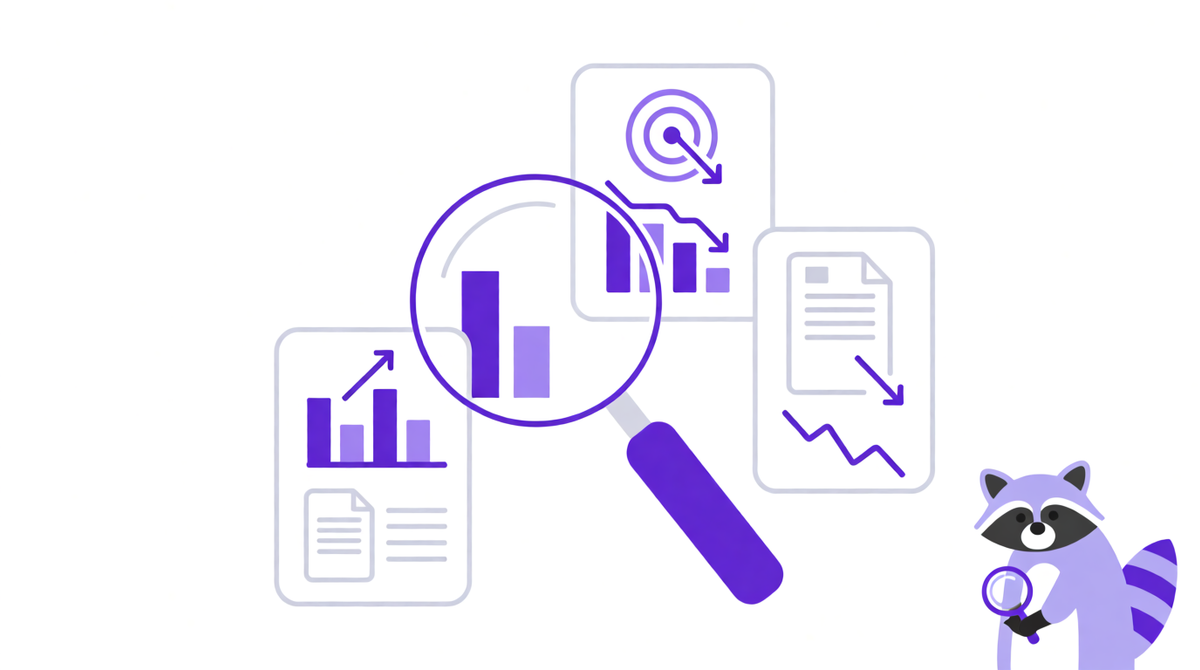
Your competitor launched a new campaign three weeks ago. It is working. Their engagement is climbing, their ad spend is growing, and your clients are starting to ask why they are not seeing the same results. Meanwhile, you are still checking 15 Facebook pages manually every Monday morning, squinting at screenshots, and guessing what to test next.
This is the reality for most agencies and performance marketers in 2026. Meta CPMs rose 47% year over year. Google Ads competition intensified by 65%. TikTok Ads hit $18.5 billion in annual spend. The cost of not knowing what your competitors are doing has never been higher, and manual tracking has never been less viable.
This guide is not another tool review list. It is a practical framework for tracking competitor ads across Google, Meta, TikTok, and programmatic platforms: what signals matter, how to capture them, and how to turn that intelligence into campaign decisions that improve ROAS. If you are new to ad intelligence, start with our beginner's guide to ad monitoring for the fundamentals.
Why tracking competitor ads matters in 2026
The advertising landscape shifted dramatically between 2024 and 2026. Three changes make competitor ad tracking essential rather than optional.
First, ad costs are rising fast. Meta CPMs jumped 47% year over year and Google Ads competition increased by 65%. When every impression costs more, you cannot afford to test blindly. Knowing which creatives, placements, and offers your competitors are scaling lets you skip the expensive trial and error phase. Marketers using ad intelligence tools report cutting their testing phase by 40 to 60% and reducing wasted ad spend by up to 30%.
Second, the number of platforms has exploded. Five years ago, most brands ran ads on two platforms: Google and Facebook. Today, a competitive brand might run campaigns across Google, Meta, TikTok, LinkedIn, YouTube, programmatic display, and Amazon Ads simultaneously. Tracking competitors across all these channels manually takes 40+ hours a week. Most agencies simply do not do it, and their campaigns suffer.
Third, AI agents are changing the speed of competitive response. Autonomous platforms can detect a competitor's new campaign within 2 to 4 hours of launch and automatically adjust bids or refresh creatives in response. If your competitors are using AI agents for ad intelligence and you are still doing manual checks, you are operating at a structural disadvantage.
What to track: the signals that actually matter
Most marketers make the mistake of tracking everything. They monitor 50 competitors across 20 metrics and end up with information overload instead of actionable intelligence. Focus on these signals instead.
Ad creative and copy: This is the most visible signal and the easiest to act on. Track your competitors' ad creatives including images, videos, carousels, headlines, primary text, and calls to action. Look for patterns: which creative formats do they run longest? Which hooks appear across multiple campaigns? What emotional angles do they use? When a competitor refreshes their creative, it usually means the previous version was fatigued. Note the refresh frequency. In competitive industries, top performers refresh creative every 21 days on average.
Platform mix and budget signals: Which platforms is your competitor active on, and how is their spend distributed? A competitor who shifts 30% of budget from Meta to TikTok is telling you something about where their audience is moving. Track estimated monthly spend per platform, and watch for significant shifts of 50% or more month over month. These moves are rarely random. They reflect performance data you cannot see.
Landing pages and offers: The ad is only the front door. Track what happens after the click. Are competitors running discount offers? Free trials? Lead magnets? Changes to landing page structure, pricing, or offers often signal a shift in acquisition strategy. A competitor who suddenly promotes a free trial instead of a demo request is probably optimizing for volume over qualification.
Audience and placement patterns: Which audiences and placements do competitors target? While exact targeting data is not public, you can infer a lot from placement patterns. If a competitor runs heavy on Instagram Reels but not Feed, their audience is younger and video-first. If they appear consistently on high-end publisher sites through programmatic, they are targeting premium demographics. These placement patterns are visible signals of targeting strategy.
How to track competitor ads manually (free methods)
Before spending on tools, start with what is freely available. These manual methods work well for monitoring 5 to 8 competitors.
Meta Ad Library: The most powerful free tool. Search any Facebook or Instagram Page and see every active ad they are running. The library shows creatives, copy, platform (Facebook, Instagram, Messenger, Audience Network), and start date. You can also see whether an ad has multiple versions. Bookmark competitor Pages and check them weekly. Note which ads persist: an ad running for 30+ days with multiple variations is almost certainly a winner. If you want to understand the bigger picture, read our introduction to ad monitoring.
Google Ads Transparency Center: Search any advertiser and see their active Google Ads across Search, Display, YouTube, and Discovery. You can filter by format, region, and time period. This is especially useful for tracking competitor search ad copy. Look for the keywords they bid on by examining their ad headlines and descriptions. A competitor running ads on '[your brand] alternative' is directly targeting your customers.
TikTok Ad Library: TikTok's ad library is newer but increasingly important. Search by advertiser name or keyword to see active and inactive campaigns. Pay attention to which ad formats competitors use: Spark Ads (boosting organic content) versus standard in-feed ads. The format choice reveals their creative strategy. Spark Ads often indicate influencer partnerships worth investigating.
Competitor websites and email signups: Sign up for competitor email lists. Track their landing pages. Use a spreadsheet to log changes to offers, pricing, and messaging. This is tedious but reveals funnel-level intelligence that ad libraries miss. A competitor who changes their landing page headline every two weeks is probably running aggressive A/B tests. That tells you what they are optimizing for.
The manual method works for agencies with a small competitor set and disciplined processes. Block 30 minutes per week per competitor. Use a structured template to log creatives, offers, platforms, and any changes since last week. Consistency matters more than comprehensiveness. A focused 30-minute check every week beats a 3-hour deep dive once a quarter.
How to automate competitor ad tracking
Manual tracking stops scaling around 8 to 10 competitors. Beyond that, you need automation. The ad intelligence tool market has matured significantly in 2026, and the options break into three tiers based on what problem you are solving.
Tier 1: Creative discovery tools. These are best for creative teams who need inspiration more than data. Platforms like Foreplay and Vibemyad focus on visual browsing and team collaboration. They let you search competitor ads, save them to boards, and spot creative trends. Pricing starts around $49 per month. These tools shine when your primary need is understanding what creatives are working, not doing forensic competitive analysis.
Tier 2: Intelligence platforms. These provide deeper data: estimated ad spend, audience demographics, engagement metrics, and historical campaign archives. SpyFu offers 15+ years of Google Ads data for keyword and budget analysis. PowerAdSpy covers 11 platforms including Google, Meta, TikTok, YouTube, and Reddit. SEMrush adds competitive PPC intelligence on top of its SEO toolset. Pricing ranges from $39 to $299 per month. These are right for performance marketers who need to understand budget allocation and campaign longevity, not just creative choices.
Tier 3: Autonomous AI agents. The newest category, and the fastest growing. These platforms do not just show you competitor data. They monitor competitors continuously and automatically adjust your campaigns in response. When a competitor increases bids on your target keywords, an AI agent can respond within hours instead of days. Systems like Ryze AI and adextract monitor 15+ competitor signals simultaneously and execute defensive or aggressive moves based on machine learning models. These are best for agencies managing 20+ accounts or brands with monthly ad spend over $50,000. Pricing starts around $500 per month but the efficiency gain often pays for itself within weeks.
The key decision point: are you trying to understand what competitors are doing, or are you trying to respond to what they are doing? Tier 1 and 2 tools answer the first question. Tier 3 tools answer both. Choose based on whether your bottleneck is research time or response time.
Turning intelligence into action
Collecting competitor data is the easy part. Most agencies fail at the next step: translating data into decisions. Here is a framework for making competitor intelligence actionable.
Tier your competitors. Not every competitor deserves equal attention. Split them into three groups. Tier 1: direct competitors with similar products and audiences (70% of monitoring effort). Tier 2: adjacent competitors who target your keywords but sell different products (25% of effort). Tier 3: aspirational competitors you want to learn from (5% of effort). This prevents the most common failure mode: spreading attention too thin across too many competitors and never acting on any of them.
Build response playbooks. Decide in advance what you will do when specific competitive moves happen. If a Tier 1 competitor launches a campaign targeting your branded keywords, your response should be scripted: increase brand keyword bids by 20%, launch a counter-creative within 48 hours, or both. If a competitor cuts spending by 50% month over month, your playbook should say: increase investment in their abandoned channels within 72 hours. Pre-written playbooks prevent reactive, emotional decisions and ensure consistent strategic responses across your team.
Run weekly competitive reviews. Schedule a 45-minute session each week to review AI-generated competitive intelligence and plan responses. The agenda should cover: high-priority alerts from the past week, trend analysis from your dashboards, competitive campaign performance assessment, and budget reallocation decisions based on competitor moves. Document every decision and its outcome. Over time, this log becomes your competitive playbook, showing which responses actually work and which are wasted effort.
Measure the ROI of your tracking. If you cannot prove that competitor intelligence is improving campaign performance, you will lose budget for the tools and the time. Track these metrics: response time to competitive threats (target under 48 hours), market share defense rate (how often you maintain position when competitors attack), and opportunity capture rate (how often you capitalize when competitors reduce spending). Most teams see a 15 to 25% ROAS improvement within 90 days of implementing structured competitive intelligence.
Common mistakes that waste your time
Tracking too many competitors. Every agency we talk to starts by tracking 30+ competitors and ends up with alert fatigue within two weeks. Start with 5 to 8 direct competitors. Expand only when you have proven you can act on the intelligence from your core set. Quality of insight decreases sharply beyond 15 to 20 competitors because the noise drowns out the signal.
Copying competitor strategies without context. Just because a competitor increases spending does not mean their campaigns are profitable. They might be burning venture capital on customer acquisition with negative unit economics. They might be testing a strategy that fails. Ad intelligence tools show what competitors do, not why they do it or whether it works. Always test competitor-inspired changes on a small scale before full implementation.
Reacting to every competitive move. Not every competitor campaign deserves a response. Develop criteria for when intelligence triggers action versus passive monitoring. Respond when: competitors target your branded keywords, launch campaigns during your peak seasons, enter new geographic markets you dominate, or significantly outspend you on high-value audiences. Ignore everything else. The goal is faster response time on the moves that matter, not faster response time on everything.
Tracking without acting. This is the most expensive mistake. Collecting competitor data without a process to turn it into campaign decisions is just a hobby. If you cannot point to at least one campaign decision in the past 30 days that was directly informed by competitor intelligence, you are not tracking. You are procrastinating with dashboards.
Start tracking this week
You do not need the perfect tool stack to start. Pick your top 5 competitors. Open the Meta Ad Library and Google Ads Transparency Center. Spend 30 minutes per competitor logging what you find. Do this every Monday for four weeks. At the end of the month, you will have more actionable competitive intelligence than 80% of agencies in your market. From there, add tools only when you have proven you can act on the intelligence you are already collecting.
Frequently asked questions
How often should I check competitor ads?
Check competitor ads at least once a week. For Tier 1 direct competitors in fast-moving industries like ecommerce or SaaS, check twice a week. AI-powered tools can monitor continuously and alert you within hours of a competitor launching a new campaign or making a significant budget shift.
Can competitors see that I am tracking their ads?
No. Ad intelligence tools access public advertising data through official ad libraries and APIs. Competitors cannot detect that you are monitoring them any more than they can detect that you visited their website. Your tracking is completely private.
How much should I spend on ad tracking tools?
Start with free tools like the Meta Ad Library and Google Ads Transparency Center. If you are tracking more than 8 competitors, budget $50 to $300 per month for an intelligence platform. For agencies managing 20+ accounts or brands spending over $50,000 per month on ads, autonomous AI agents at $500 to $1,000 per month typically pay for themselves within 4 to 6 weeks through improved campaign performance.
What is the difference between ad monitoring and ad tracking?
Ad monitoring is the broad practice of watching competitor advertising activity across platforms to understand their overall strategy. Ad tracking is more specific: following individual campaigns, creatives, or metrics over time to measure changes and performance. Monitoring tells you what competitors are doing; tracking tells you how it is changing. Most agencies need both, starting with monitoring and adding tracking for their highest-priority competitors.